During a recent lecture, I was delivering a session to educators, we delved into the evolving role of AI in the classroom. A unanimous takeaway emerged: AI is here to stay, how are we embracing it?
Rather than imposing bans, the pivotal question becomes: How can we guide students to integrate AI tools responsibly and meaningfully? This is especially pertinent in primary and secondary education, where early, guided exposure can cultivate critical thinking and ethical usage.
I introduced the AI Assessment Scale (AIAS)—a practical framework designed to help educators and students navigate AI’s role in learning and assessment. This scale outlines five levels of AI integration, from “No AI” to “Full AI,” providing clarity on appropriate usage based on learning objectives.
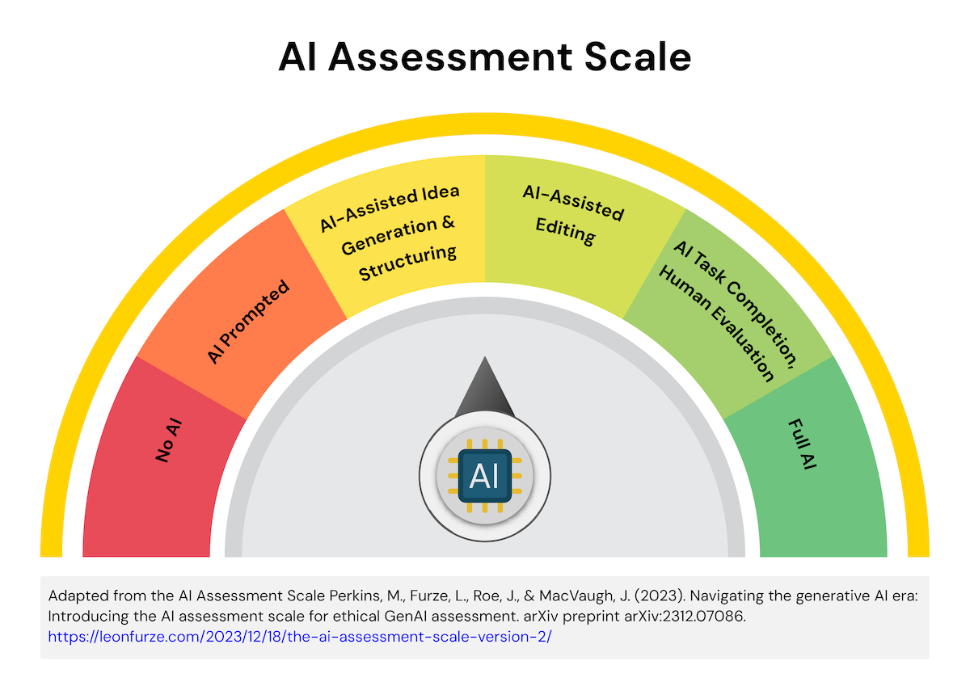
I shared AIAS, as a classroom-ready framework that helps teachers structure how AI is used in learning. Even better if adopted school-wide: https://aiassessmentscale.com
A multitude of use cases can emerge from this model. In the image below, the author shows how the educator may specify AI usage for set tasks, if any is allowed. From a student’s perspective, the AI assessment scale can help promote responsible use of AI. It could also increase confidence in using AI as part of the learning process.
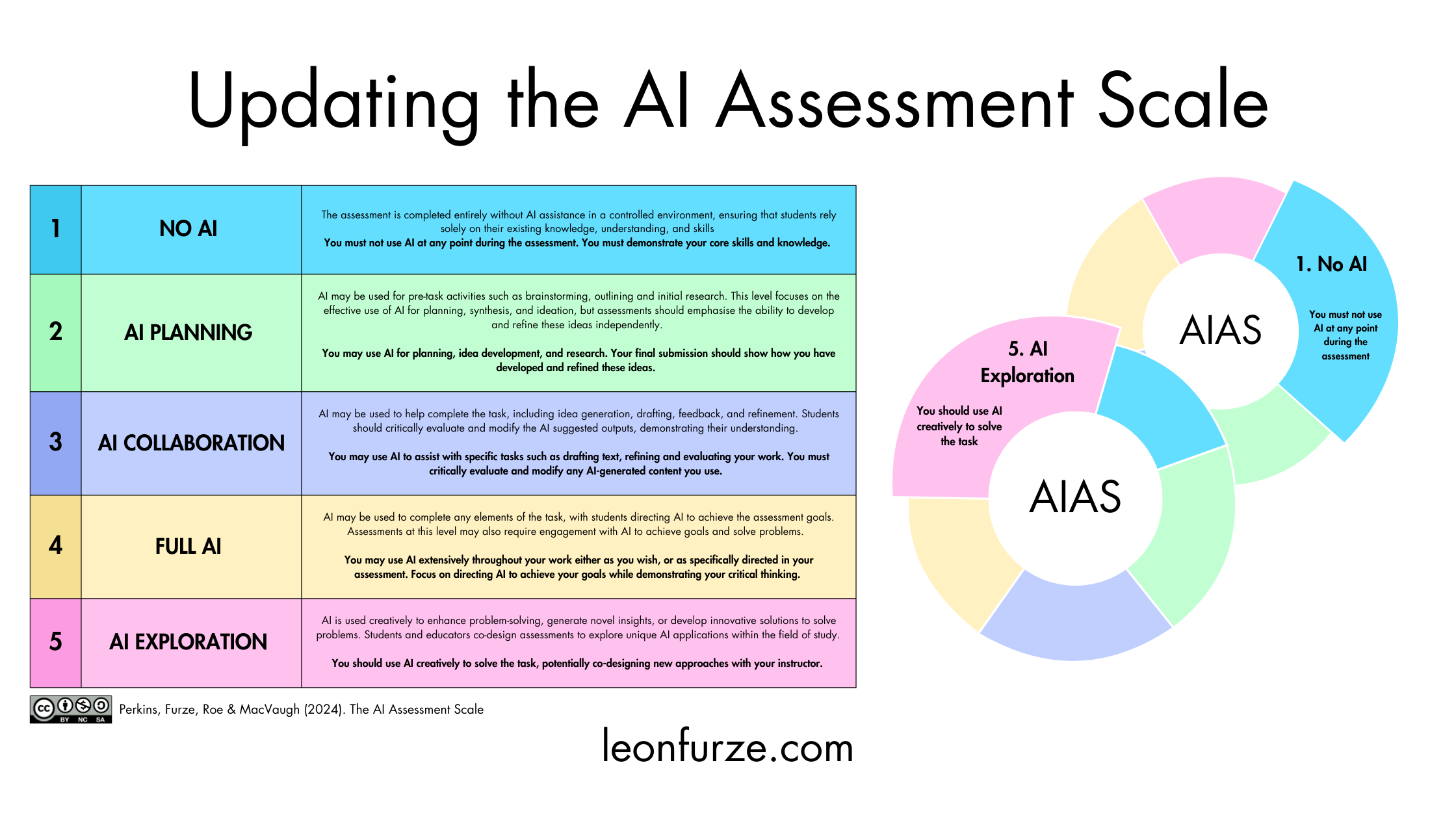
Ideally, school leaders should seek to develop a school-wide AI policy that promotes fairness, clarity, and innovation. This will boost educators’ competence and confidence. In turn empowering stakeholders to use AI as a learning partner, not a threat.
Let’s transition from apprehension to structured adoption, empowering our students for a future intertwined with AI.
#AIinEducation #EdTech #ResponsibleAI

 Kijt's #EdTech Blog